
Okay, so check this out—I’ve been logging into a bunch of exchanges recently and OKX kept popping up for one simple reason: it tries to be a one-stop shop for traders who want both straightforward spot trading and an easy bridge into Web3. Wow. At first glance it looks like another exchange, but my instinct said there was more under the hood. I’m biased, sure, but after a few sessions it felt like the pieces actually worked together.
I’ll be honest: the first time I connected a wallet I hesitated. Something felt off about the UX—too many confirmations, too many pop-ups. But once you get the flow, especially with OKX’s in-platform wallet, it’s faster than you’d expect. Seriously, the friction is lower than a typical browser-extension-to-exchange handoff, which matters when markets move fast and you don’t want to miss a trade.
Here’s the thing. For US-based traders who are familiar with spot trading on centralized platforms, the idea of “Web3” can either be thrilling or annoying. On one hand, Web3 means self-custody, composability, and access to on-chain yields. On the other hand, that freedom comes with responsibility—private keys and seed phrases, and yeah, some anxiety. On OKX they try to bridge that gap: custodial convenience for spot markets paired with a Web3 wallet that lets you step out onto chains without leaving the environment.
How the OKX Wallet and Web3 Features Fit Into Spot Trading
When I talk to traders about OKX, I usually point them to the wallet-first flow—it’s where everything converges. You can fund your account for immediate spot trades, or route funds to the built-in wallet for bridge operations, NFT interactions, or DeFi experiments. It’s neat because you can flit between on-exchange order books and on-chain activity without juggling a dozen apps. If you want to check it out yourself, start here: okx.
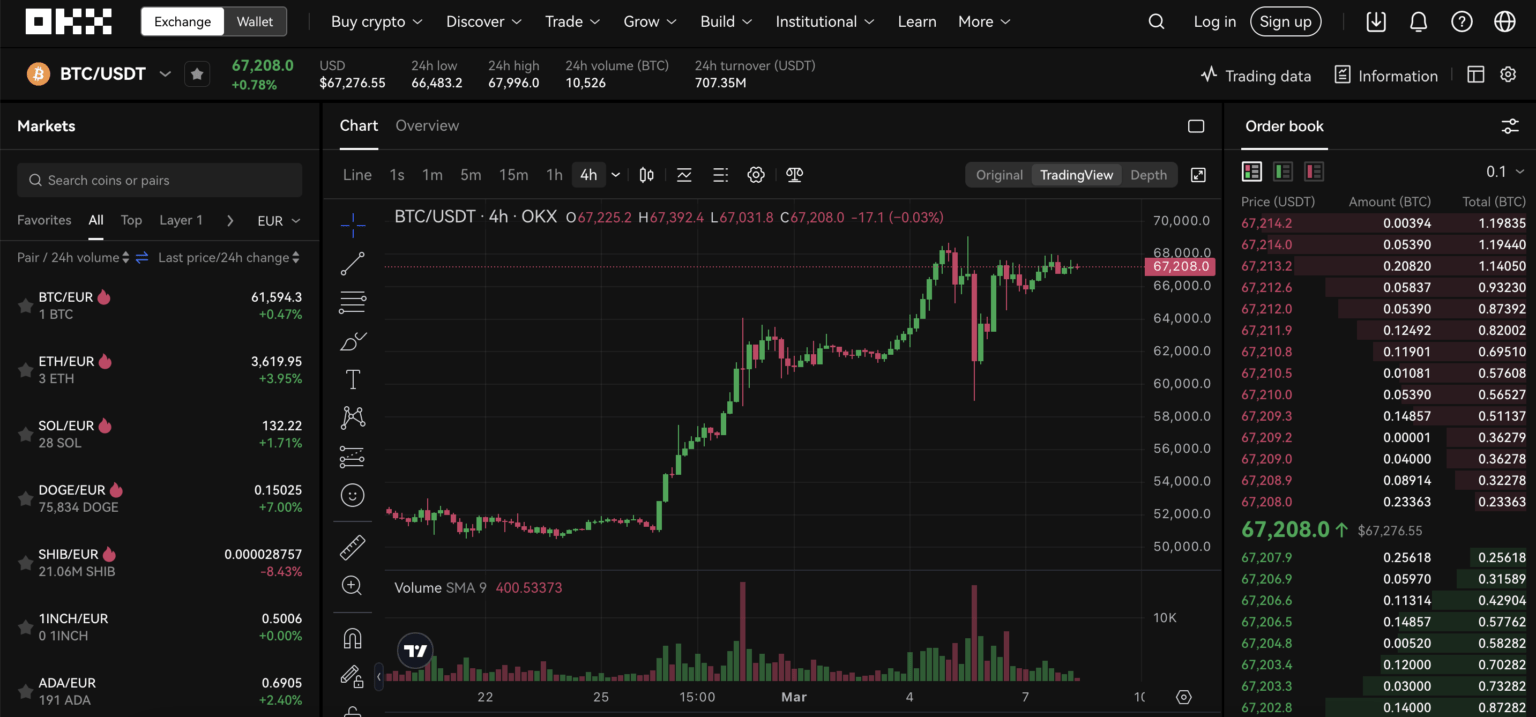
Spot trading remains the bread-and-butter for most users. The order types are what you’d expect—market, limit, stop-limit—and the interface is fairly clean. Medium-sized traders will appreciate the charting tools and order book transparency. But don’t sleep on the wallet features: deposits are instant inside the ecosystem, and that reduces the time you’re exposed to transfer delays when trying to capitalize on a sudden move.
One nuance that bugs me: bridging tokens into Web3 sometimes shows token approvals and gas estimates that can be confusing to newer traders. (Oh, and by the way—if you’re coming from purely centralized platforms, gas is its own little headache.) My recommendation is to start small. Move a test amount, confirm the steps, and learn the approval sequence. Once it’s familiar, the added flexibility is worth the tiny learning curve.
Compliance and regulation matter, especially for folks in the US. OKX, like other major exchanges, has been iterating on KYC and withdrawal controls. That means smoother fiat on-ramps for some users, but also more identity checks before you can use certain on-chain features. On one hand, that’s annoying; on the other, it prevents headaches down the line if you need to justify large transfers or tax events.
Risk management is practical. Use two separate approaches: keep a custodial balance for active spot trading and a segregated self-custody wallet for longer-term Web3 plays. Treat them like separate accounts. If you only trust one setup, diversify your approach so a mistake in one realm doesn’t wreck the other. I’m not 100% certain this fits everyone’s workflow, but it’s worked for me.
Practical Tips for US Traders
Short checklist—because nobody reads walls of text while the market’s moving:
- Set 2FA and a strong password for exchange access.
- Use the OKX wallet for on-chain interactions; test with small amounts first.
- Keep fiat and spot exposure separate from long-term Web3 assets.
- Monitor network fees before bridging; time transfers when gas is low.
- Document transactions for tax purposes—income can be realized on-chain and off.
In terms of UX, something I liked was OKX’s attempt to contextualize Web3 actions. Instead of throwing raw approvals at you with no explanation, they add hint text and expected costs. It’s not perfect. Sometimes estimates miss the mark. But it’s better than getting surprised by eight bucks in gas on a fifty-cent token swap. That part really bugs me when other platforms don’t preface the cost.
One more practical note: customer support response times vary. When I had a deposit glitch late on a Sunday, it took longer than I’d hoped to get a human. Plan ahead. Don’t assume immediate help if you need to move funds during a flash market event.
FAQ
Can I use the OKX wallet without using OKX’s spot exchange?
Yes. The wallet can function as a standalone Web3 wallet for on-chain activity. That said, using it inside the OKX ecosystem gives you quick deposits and a faster path to convert on-chain assets into spot positions.
Are US users restricted from anything?
Some features—particularly certain derivatives or token listings—may be limited due to regulatory constraints. KYC requirements are stricter for higher withdrawal limits and fiat gateways, so expect identity verification if you scale up.
Is spot trading on OKX good for beginners?
It’s accessible. The interface is neither too cluttered nor overly simplified. Beginners can place basic orders easily, but learning about risk management, order types, and fees will help avoid common mistakes.
Alright—so what’s the takeaway? For US traders who want a hybrid experience, OKX is a sensible middle ground: solid spot tools, an integrated wallet, and a path into Web3 without jumping through five separate hoops. It’s not flawless, and I still have nitpicks about gas estimation and support response times, but the integration is meaningful enough that it’s worth a try. Try it carefully, and don’t forget to test with small amounts—seriously, test first, trade later.